Durable Surfaces Built for High Traffic and Heavy Loads
Parking Lots in Topeka for cracked, sunken, or poorly draining asphalt and concrete under commercial use
Concrete By Hampton installs concrete and asphalt parking lots for commercial properties in Topeka and surrounding areas, serving business owners who need a durable surface that handles daily vehicle traffic, delivery trucks, and heavy loads without cracking or developing potholes. You're managing a lot that shows signs of stress from years of use, with low spots that collect water, edges that crumble under turning wheels, and sections that have settled unevenly due to poor base preparation or inadequate drainage.
The installation process starts with site evaluation and layout planning to ensure the finished lot supports proper traffic flow, drainage, and long-term usability. The crew excavates to the required depth, grades the subbase to direct water away from buildings and toward storm drains, and compacts the base material to create a stable foundation. For concrete lots, the material is poured in sections with control joints to manage expansion and contraction. For asphalt lots, the surface is laid in lifts and compacted with rollers to eliminate voids and create a smooth, even finish. The result is a parking area that drains quickly after rain, supports heavy vehicles without rutting, and requires minimal maintenance over the first decade.
If your current lot has potholes wider than your fist or sections that pond water after every storm, reach out to discuss replacement options and project coordination.
What Goes Into a Commercial-Grade Parking Surface
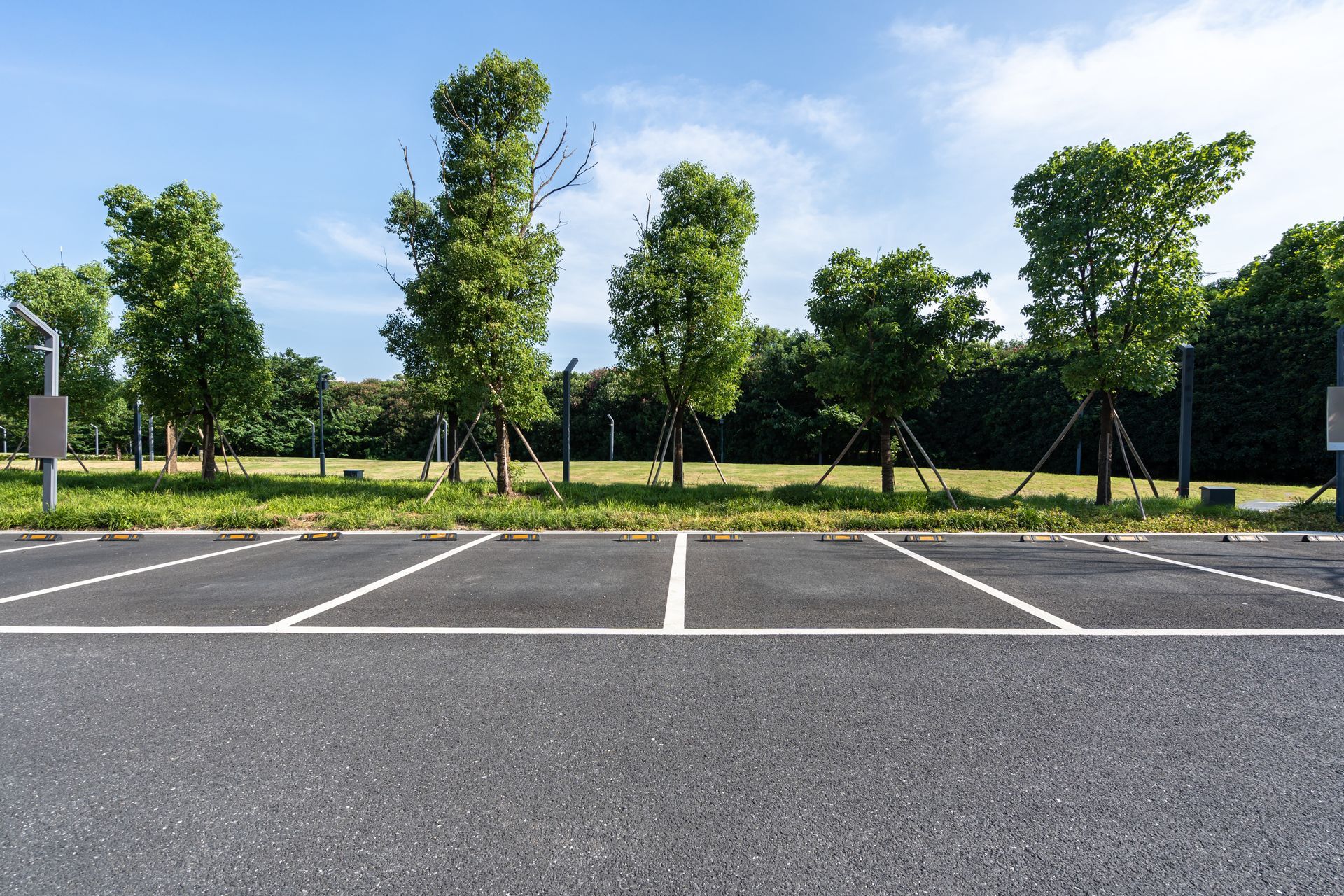
You'll notice that the new lot stays level under the weight of delivery trucks and doesn't develop ruts in high-traffic lanes. The base is compacted in layers using vibratory rollers, which eliminates soft spots and ensures the surface won't settle unevenly over time. Drainage is built into the grade from the start, so water flows toward designated collection points instead of pooling in the middle of driving lanes or near building entrances.
Concrete By Hampton coordinates the project timeline with business operations to minimize disruption, which often means working in phases so part of the lot remains accessible while the other section is under construction. The crew communicates clearly about daily progress, access restrictions, and when each area will be ready for use. For concrete lots, the surface can typically handle light traffic within a week, while asphalt lots are ready for use within 24 to 48 hours after the final compaction.
The project timeline depends on the size of the lot, the condition of the existing surface, and site access for equipment. Most installations move from excavation to final paving within two to three weeks, though larger projects or those requiring extensive grading may take longer. Striping and marking are typically completed after the surface has cured fully.
Questions Business Owners Ask About Parking Lot Installation
Business owners often want to understand the differences between materials, how long the work takes, and what affects the lifespan of the finished lot. Here are the most common questions that come up during planning.
What is the difference between concrete and asphalt for parking lots?
Concrete is more durable and lasts longer, typically 30 years or more, but costs more upfront. Asphalt is less expensive and faster to install but requires seal coating every few years and may need resurfacing after 15 to 20 years.
How thick does a parking lot need to be in Topeka?
Base thickness depends on expected traffic loads and soil conditions, but most commercial lots use six to eight inches of compacted aggregate base topped with four to six inches of concrete or three inches of asphalt.
What if the lot needs to stay partially open during construction?
The crew can phase the work to keep sections accessible, though this extends the overall timeline. Clear communication and advance planning help minimize disruption to daily operations.
How is drainage handled on a flat site?
The crew creates a crown or slope in the lot surface to direct water toward catch basins or edges, even on sites that appear level. Proper grading prevents standing water and extends the life of the pavement.
When can vehicles use the lot after paving?
Asphalt lots can handle light traffic within 24 hours, while concrete lots need at least seven days to cure before supporting full vehicle loads. The crew provides specific guidance based on weather and project conditions.
Concrete By Hampton works with commercial property owners throughout Topeka to plan and install parking lots that meet business needs and stay functional under heavy use. Call (785) 580-7858 to schedule a site evaluation and discuss your project scope and timeline.